

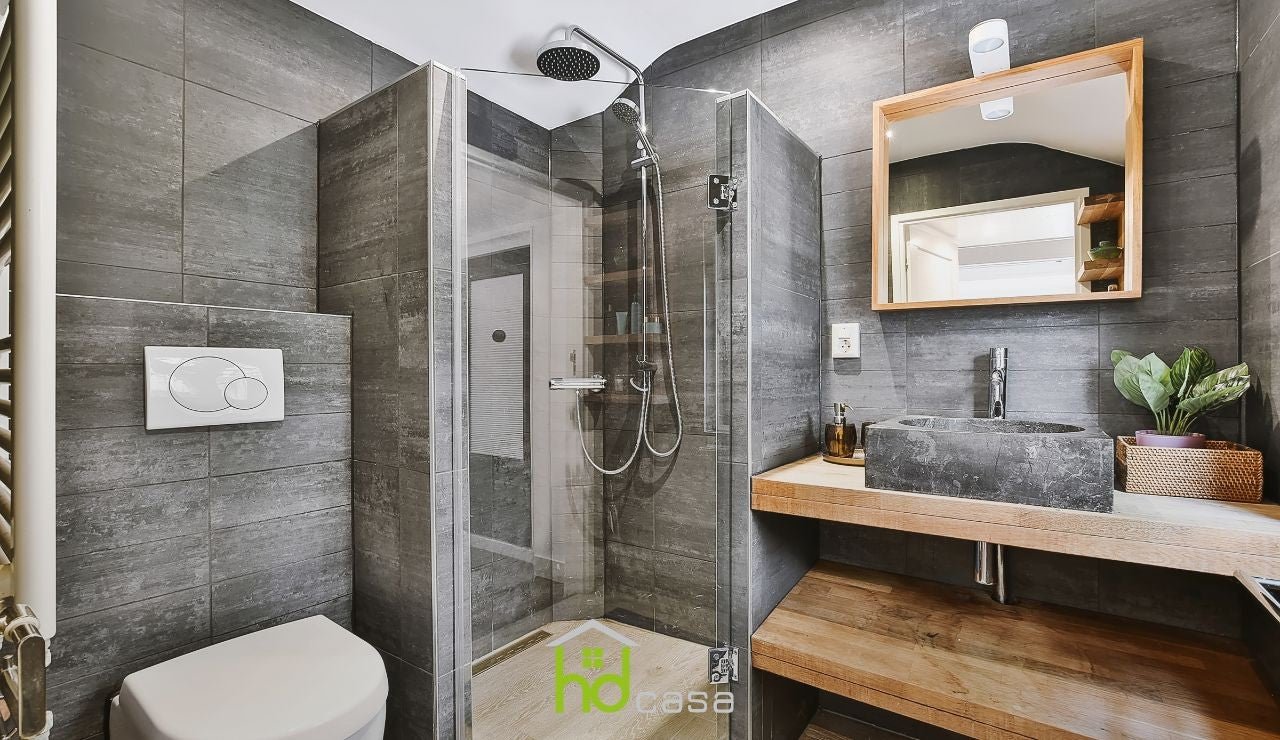
If you are building a house and looking for advice on how to tile a bathroom taking into account current interior design trends and the most popular decor choices, you are in the right place. In this article, we will explore together different solutions to tile the bathroom, based on the decor style you have chosen for this room, in order to maximize your spaces and make the best use of the available exposure. We will take into account interior design trends to help you create a space that best incorporates the trend elements, while still allowing your personal preferences and personality to shine through.
Tiling the bathroom with particular tile layouts
One of the most popular trends in bathroom tiling this year has seen the arrangement of this wall covering with herringbone tiles and mosaic-effect tiles, especially inside modern bathrooms.
Tiling the bathroom with herringbone tiles

The arrangement of herringbone tiles is a reinterpretation of a method already used in the past, which has come back into fashion also due to the inspiration from a highly prized and elegant type of parquet layout.
The arrangement of the wall covering following this scheme gives movement to the floor or wall on which it is placed, already becoming a true decorative element of the bathroom.
Furthermore, by choosing a light tile and perhaps with a glossy finish for the wall, it is possible to perceptually enlarge the available space, making it a creative and suitable solution for tiling small bathrooms.
Tiling a bathroom with mosaic tiles

Mosaic tiles are made of small tesserae of different shapes and sizes, designed to offer the possibility of creating, through their combination, designs, geometric shapes, and overall giving the walls or floors on which they are placed an artistic, refined, and elegant effect.
The convenience of choosing to clad the bathroom with mosaic tiles consists in being able to measure the number of shapes and geometries that can be created, as well as being able to create the perfect cladding for one's own decor style, choosing colors, textures, and designs that can perfectly adapt to the various furnishing accessories and other elements you will place in this room.
Tiling a bathroom with mixed tiles

Another highly popular trend in bathroom tiling this year featured a style widely used in Amalfi: mixed tiles.
Even though the classic one involves using a set of rather defined colors and patterns, the current trend is to take inspiration solely from the concept of the style used in this Coast town: by incorporating the colors, geometries, and overall also the textures found in the furnishing accessories, sanitary ware, perhaps also taking a look at shower trays and washbasins, with this cladding method, the walls and flooring of the bathroom are the true protagonists of the decor.
The goal is to give new shape and prominence to minimalism, continuing to prefer the absence of many decorative details in the furnishing accessories and bringing movement and liveliness to the walls and floor to still give movement and character to the decor.
Cladding a bathroom with mixed tiles is the ideal solution for a large, modern bathroom with a minimalist style, which will create movement and a balance between the perception of filling the environment given by the play of tiles, preserving the simplicity of the bathroom in a game of movement and simplicity that will give a lot of character to this room of the house.
Cladding a bathroom with wood-effect porcelain stoneware: the evergreen

If the elegant effect of wood cladding continues to exert its timeless appeal on many people who find themselves decorating their homes and choosing this pattern, it is easy to understand why wood-effect porcelain stoneware was such a sought-after and appreciated solution again this year for the decor and cladding of bathrooms.
The wood-effect porcelain stoneware offers the practicality of maintenance, replacement, and cleaning typical of ceramic tiles, giving environments the elegant and lush beauty of parquet, combined with the resistance and ease of cleaning that only porcelain stoneware can guarantee.
These characteristics make the choice of cladding the bathroom with this material a slightly more substantial initial investment, but one that pays off handsomely in terms of ease of maintenance and durability over time. Therefore, this represents an alternative worthy of consideration, regardless of the trendy bathrooms, which follow rules that come and go every year.
Tiling bathrooms with Moroccan zellige: color and liveliness

Moroccan zellige is a type of wall cladding with ancient origins: produced since the 10th century in Morocco in an exclusively handcrafted way, today it is also appearing in the choices for tiling the bathroom and the rest of the walls of the house to give a touch of personality and liveliness to the environments, without excesses. Traditionally made in shades of white and brown, today they are instead proposed in any shade.
The color and tile pattern can involve the fusion of different textures (even an alternation of glossy and matte tiles) with the aim of modulating and personalizing the degree of movement, liveliness, and color that the tiles must give to the decor, harmonizing consistently with the selected furniture.
Tiling the bathroom with Moroccan zellige, even on just one or two walls of the bathroom, can give this room of the house a beautiful look in its imperfections, can give character and vibration to the bathroom and the entire decor, especially if you have chosen particularly simple furnishing accessories, which can find a balance and a nice play of contrasts with this type of cladding.
Japandi cladding: beauty, design, sustainability in one solution

Japandi decor is one of the undisputed protagonists of interior design magazines and bathroom decor choices in the last year. This style combines the timeless beauty of Japanese design with the modern and industrial minimalism characteristic of the Scandinavian style, creating a new concept of minimalism, which evokes a sense of originality, character, and style without the need for numerous ornaments and details, in clear continuity with the essence of both original styles.
To achieve a bathroom in perfect Japandi style, it is advisable to use wood or bamboo panels, as wood is an element widely present in environments decorated according to the guidelines of this style. Not only does it give a unique look to the spaces where it is applied, but it also retains heat coming from heating systems. However, it is important to pay extra attention to cleaning, avoiding the use of aggressive products, such as those containing bleach, and occasionally considering a polishing process to prepare the claddings for any water splashes and constant humidity.
Regardless of the type of material you choose for the bathroom cladding, in this article we have presented you the trends suggested by interior designers and those that emerge from the choices of people like you, grappling with the decision to tile their bathroom. The goal is to find a balance between the desire to follow the latest trends and the importance of ensuring that the bathroom is equipped with elements of timeless elegance, especially when it comes to structural components of domestic environments.
Unlike bathroom accessories, bathroom cladding represents a considerable investment and is not an activity that takes place frequently. Therefore, it is essential to select a pattern and materials that fully reflect your personal tastes, so that you can always find new ways to renew the beauty of your bathroom and always be satisfied with the chosen cladding.


