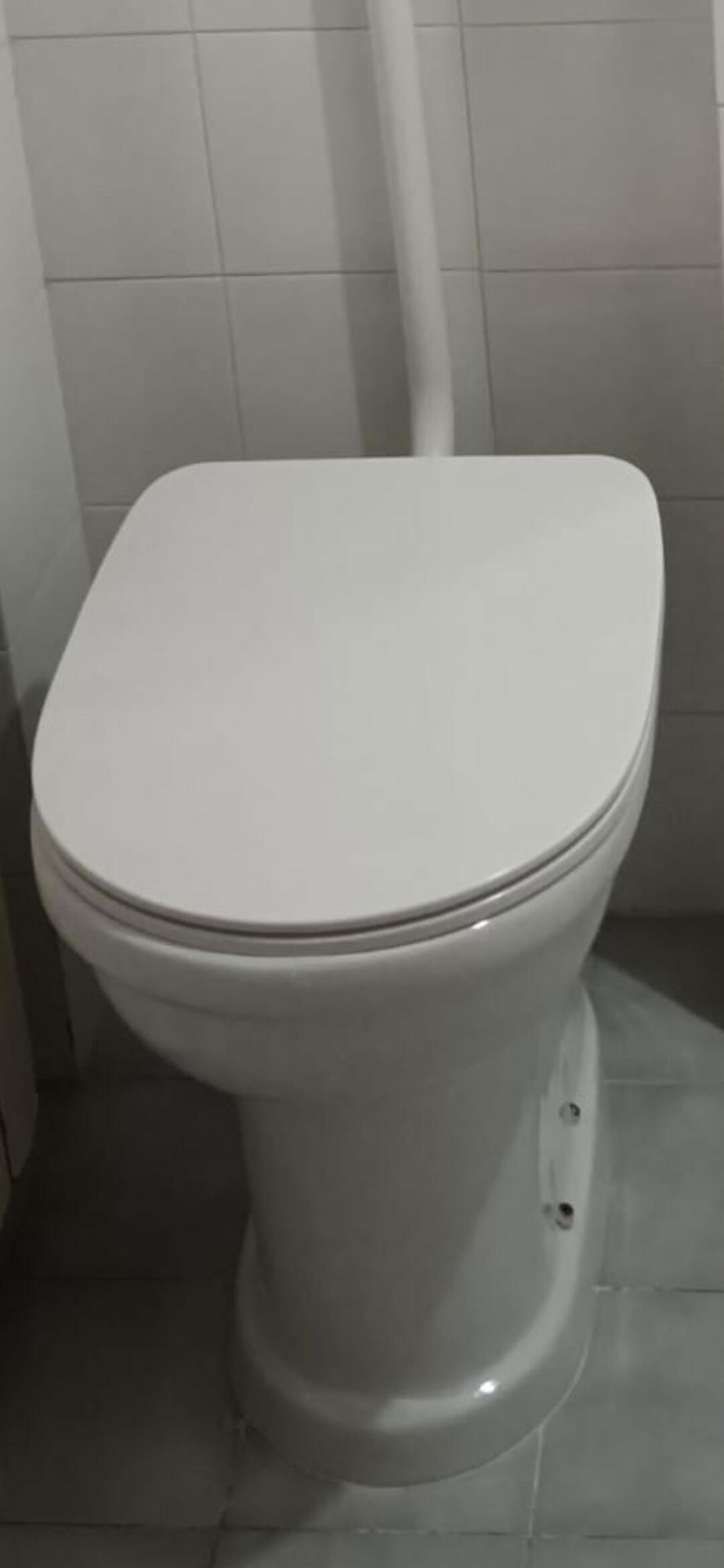

In short: muriatic acid (diluted hydrochloric acid) really does dissolve hard limescale deposits in the toilet, but it is the most aggressive option there is: use it only on stubborn deposits that resist everything else, in small doses (100-200 ml), for 15-30 minutes at most and NEVER together with bleach. If you have a septic tank or an old drainage system, better to go for the alternatives: citric acid, specific descaling gels, pumice stone.
You have tried the supermarket descaler, vinegar, the toilet brush and elbow grease, but that yellowish ring at the bottom of the bowl will not budge. At this point someone has told you: “Pour in some muriatic acid and you're done”. Is it true? Partly yes — but it is also the quickest way to hurt yourself or ruin your bathroom if you do not know exactly what you are handling.
In this guide we look at when muriatic acid in the toilet makes sense and when it is a mistake, how to use it safely step by step, and which less risky alternatives work almost as well. If instead you are looking for an overview of all the methods, from routine cleaning to natural remedies, start from our general guide on how to descale the toilet: here we go in depth only on the “heavy-duty” method.
What muriatic acid is (and why it dissolves limescale)
Muriatic acid is the commercial name for hydrochloric acid in aqueous solution, generally at a concentration between 10% and 33% in hardware-store and DIY formats. It is a strong acid: it reacts with calcium carbonate — that is, limescale, and the urine scale bound to it — and dissolves it in a few minutes, where a household descaler would take hours.
This very strength is the problem: the acid does not distinguish between the deposit and what lies beneath or around it. It attacks metals (chrome plating, hinges, cistern components), corrodes seals, releases fumes that irritate the eyes and airways and, on contact with skin, causes chemical burns. It is not a detergent: it is a reagent to be used as a last resort, with precise rules.
When using it makes sense (and when it is a mistake)
The cases where it is justified
- Hard, layered limescale deposits at the bottom of the bowl or under the rim, which have resisted citric acid, descaling gels and mechanical action.
- Toilets in houses left closed for a long time (second homes, vacant properties), where evaporated water has left thick mineral deposits.
- Before replacing the sanitaryware: if you are considering changing the bowl because it “never comes white again”, a controlled treatment can recover it and save you the replacement.
The cases where it is a mistake
- You have a septic tank: the acid kills the bacteria that make the tank work and upsets its balance. Use only septic-safe products.
- An old drainage system with metal pipes or lead joints: the acid corrodes them, and a leak in the drain costs far more than a yellowed toilet.
- Routine cleaning or light stains: using muriatic acid every week progressively ruins the ceramic glaze, which becomes porous and gets dirty faster and faster. It is the classic cure that is worse than the disease.
- You have just used bleach or other products: see the safety box below — it is the most important point of the whole article.
How to use muriatic acid in the toilet safely, step by step
1. Prepare the room and your protective gear
Open the window or switch on the extractor fan and keep the bathroom door open: hydrochloric acid fumes are heavier than air and linger. Wear thick rubber gloves, safety goggles and clothing that covers arms and legs. Move rugs, towels and any metal object away from the bowl. Children and pets out of the bathroom until you have finished and rinsed.
2. Check that there is only clean water in the bowl
If you have used bleach, toilet gel or any other cleaner in the previous hours, flush two or three times and wait for the bowl to refill with clean water. No residue of other products must come into contact with the acid.
3. Pour in a little acid, along the sides
You do not need half a bottle: 100-200 ml are enough. Pour slowly, from close up to avoid splashes, letting the liquid run down the sides of the bowl so that it reaches the deposit. The water in the trap dilutes the acid and protects the drain: do not empty it.
4. Leave it to work for 15-30 minutes, no longer
You will hear a slight fizzing: that is the acid reacting with the limescale. Do not leave it to work for hours or overnight: after half an hour the deposit has already reacted, and the excess acid keeps working on the glaze and the seals. If the deposit is very thick, a second short treatment the next day is better than prolonged exposure.
5. Brush and rinse thoroughly
Go over the softened residue with a plastic toilet brush (never metal scourers together with the acid), then flush 3-4 times to dilute and remove every trace. Wash the brush under running water and let the bathroom air for another ten minutes.
Doses and times: the reference table
| Situation | Recommended product | Dose | Contact time |
|---|---|---|---|
| Streaks and light limescale | Citric acid in hot water | 150 g in 1 l | 1-2 hours |
| Medium deposits, ring at the bottom | Specific toilet descaling gel | As per label | 30-60 min |
| Hard deposits that resist everything | Muriatic acid | 100-200 ml | 15-30 min max |
| Very thick deposits (house closed for a long time) | Muriatic acid, 2 rounds | 100-200 ml each time | 2 × 20-30 min on different days |
Indicative values for glazed ceramic toilets with PVC/PP drain pipes. With a septic tank, avoid muriatic acid altogether.
NEVER MIX MURIATIC ACID AND BLEACH. The reaction between hydrochloric acid and sodium hypochlorite releases chlorine gas, toxic even in small quantities in a closed room like a bathroom. This also applies to residues: if there is still bleach from a previous cleaning in the bowl, rinse thoroughly before pouring in the acid. In case of exposure to the fumes: get out into fresh air immediately and, if the irritation persists, contact your local poison control centre.
The safer alternatives that work
In most cases you can achieve the same result with a few more hours of patience and far fewer risks:
- Citric acid: 150 g dissolved in a litre of hot water, poured into the bowl and left to work for 1-2 hours. It is the “gentle” descaler par excellence: effective, biodegradable and septic-safe. Perfect as prevention too, once a week.
- Specific toilet descaling gels: they contain buffered acids (often hydrochloric itself at low concentration) in a thick formula that clings to the sides and under the rim. The best effectiveness/safety compromise for medium deposits.
- Pumice stone for sanitaryware: on the limescale ring at the waterline it works by abrasion, without chemicals. Use it wet and gently on the glaze.
- Hot vinegar and baking soda: the classic home remedy, suitable for streaks and light deposits. On hard deposits, however, it is not enough: citric acid is better, more concentrated and odourless.
For the limescale that also forms above the waterline and under the rim, you will find the detailed methods in the guide on how to clean limescale off the toilet.
If the limescale always comes back, the problem is the water (or the toilet)
A toilet that keeps scaling up is the symptom, not the disease. The typical causes are two:
- Very hard water: if you live with limescale on the shower, taps and boiler too, consider treating it upstream. A water softener drastically reduces deposits throughout the house: you will find systems and filters in the water treatment collection.
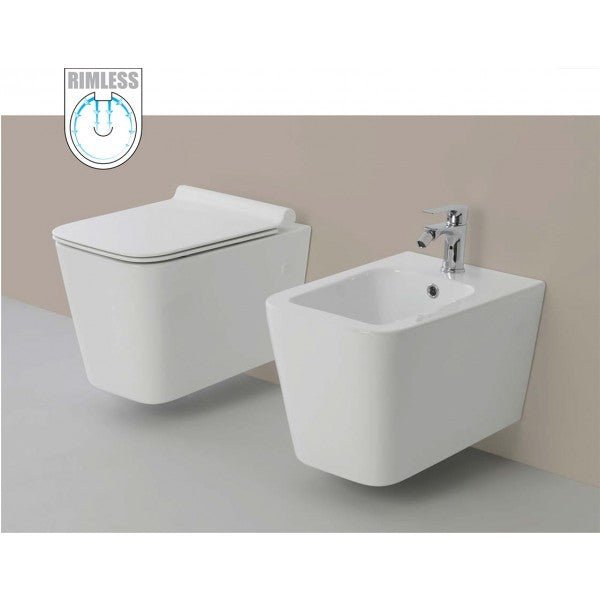
- Sanitaryware at the end of its life: when the glaze has become porous (perhaps precisely because of years of aggressive treatments), dirt takes hold within hours whatever you do. In that case the definitive solution is to replace the bowl: in the toilets and bidets collection you will find modern sanitaryware, including rimless models, much easier to keep clean.
FAQ: frequently asked questions about muriatic acid in the toilet
Does muriatic acid ruin the toilet?
Used rarely, in small doses and for a few minutes, no. Used often or left to work for hours, yes: it dulls and makes the ceramic glaze porous, and corrodes the metal parts and the drain seals.
Can I leave muriatic acid in the toilet overnight?
No, it is a common mistake. After 15-30 minutes the reaction with the limescale has already taken place: the excess acid only keeps attacking the glaze and the seals. Two short treatments are better than one long one.
Do muriatic acid and bleach together clean better?
No: together they release chlorine gas, which is toxic. It is the most dangerous combination you can create in a bathroom. Use one product at a time and rinse thoroughly between one and the other.
Can muriatic acid be used with a septic tank?
Better not: even a single dose damages the bacterial flora that makes the tank work. Use citric acid or descalers declared septic-safe.
Does muriatic acid also work to unblock the toilet?
No. If the drain is slow or blocked, the problem is almost always a mechanical obstruction (paper, objects), not limescale: the acid does not solve it and complicates the next intervention. Follow instead the guide on how to unblock the toilet.
In conclusion
Muriatic acid in the toilet is like a scalpel: it solves the problem, but only in the right hands and in the right cases. Reserve it for deposits that have resisted everything, respect the doses (100-200 ml) and times (max 30 minutes), protect your eyes and hands and never let it come near bleach. For everything else, citric acid and specific gels are more than enough — and if limescale is more at home in your house than you are, the real investment is treating the water upstream or replacing sanitaryware that has become porous: you will find both solutions on hdcasa.it, with fast shipping and instalment payment options.
Related guides: how to descale the toilet (complete guide) · how to clean limescale off the toilet · how to remove limescale from the shower.