

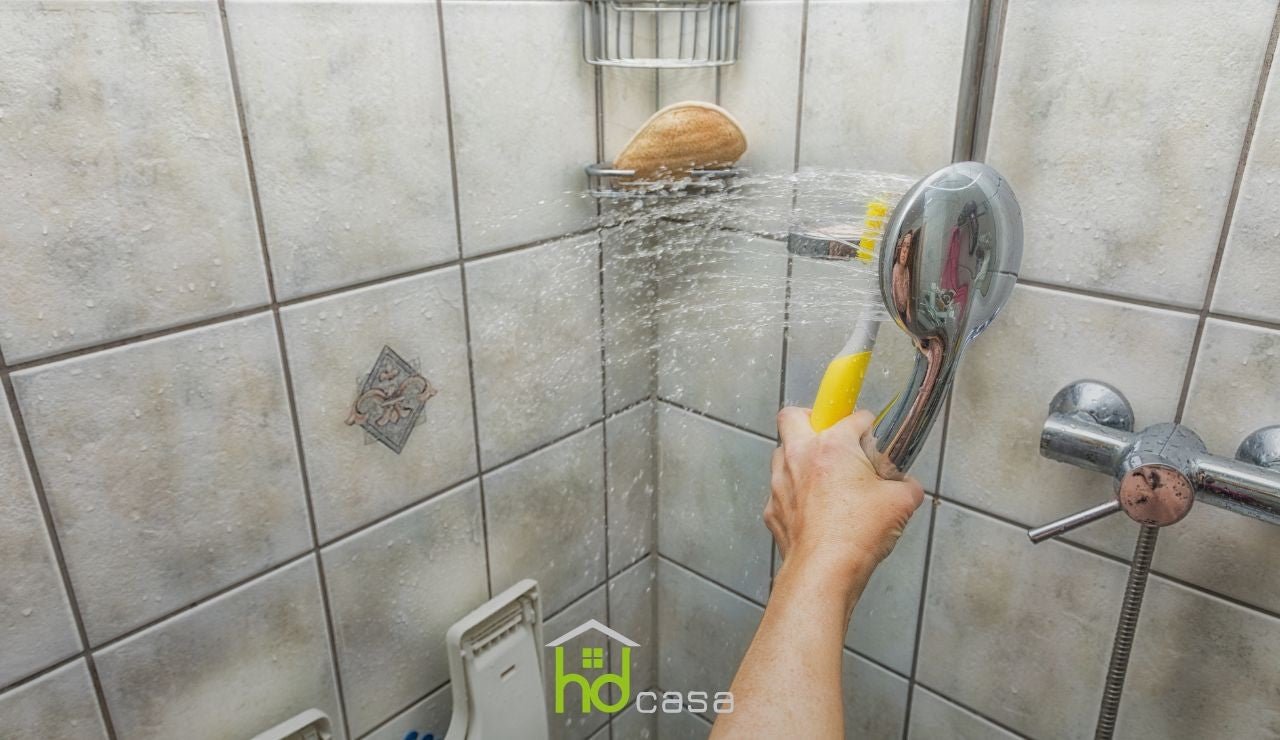
Knowing how to clean the shower enclosure in every part is important to maintain an optimal condition of the sanitary fixture.
Thorough cleaning is not difficult, but you must know how to choose the detergents suitable for the composition materials used for each of its components, so as not to risk compromising its structure.
In this article we will provide you with a complete guide for a thorough and accurate shower enclosure cleaning.
What accumulates in the shower enclosure
Being for daily use, the shower enclosure tends to accumulate dirt of different nature and type.
Among the most common causes:
- Limescale accumulation: this is the number 1 enemy of the shower enclosure, as water drops that are not properly dried after use deposit on surfaces and easily lead to limescale formation.
- Mold formation: very common in showers due to temperature fluctuations caused by hot water and humidity.
- Product residues: shampoo, shower gel, detergents, and whatever else falls on surfaces cause encrusted dirt.
With the right remedies however, it is not difficult to keep it clean and shining.
Shower enclosure cleaning: start with the gaskets
Shower enclosure cleaning starts with the profiles and gaskets.
The profiles, in aluminum or stainless steel, must be cleaned with a specific detergent, so buy a compatible one.
For cleaning:
- Use a delicate sponge to dip in the detergent.
- Rinse with cold water.
- Dry with a cloth in microfiber or cotton.
The gaskets, that is the plastic profiles that seal the shower enclosure, are generally removable and therefore very simple to wash.
To do it:
- Remove the gasket.
- Use a sponge to wet with water and soap, delicate bleach, a classic bathroom detergent, or an anti-limescale product.
- Clean the whole gasket well.
- Dry with a cloth in cotton
- Reassemble the gasket.
Cleaning shower taps
The taps and shower head, being in direct contact with water, are subject to an easy accumulation of limescale, in addition to dirt due to their daily use.
To avoid encrustations that invalidate their use, it is necessary to proceed with an accurate cleaning on a cyclic time basis.
An excellent habit is to dry both after each use so as not to allow water to stagnate and limescale to deposit and form annoying white hazes.
- For tap cleaning, you can choose to use a natural method, such as baking soda combined with vinegar or hot water, or buy a specific anti-limescale detergent.
- For shower head cleaning, equip yourself with a needle or toothpick to free and thoroughly clean the rubber nozzles.
Cleaning shower enclosure glass
Shower enclosure cleaning also includes that of the glass.
There is a different cleaning method for each type of glass:
- Classic glass or PVC panels involve different cleaning methods. From classic specific detergent, to simple water, or even natural cleaning methods like white vinegar or baking soda.
- Frosted glass instead requires greater attention so as not to ruin the matting film. For regular cleaning use simple water or alcohol, for a deeper one, a glass cleaner will be perfect.
Rinse always with cold water and dry with absorbent paper or newspaper sheet at the end of each cleaning.
Cleaning the shower tray
Cleaning the shower tray is not a complex task, you just need to know the right cleaning methods and systems.
The shower tray is one of the most important components of the shower enclosure and keeping it always clean and sanitized is a necessity.
In this case too, cleaning methods are varied and include commercial products, but also natural and homemade ones.
Among the most used methods:
- Vinegar and baking soda, to mix together and spread over the entire surface. This mixture is excellent especially against limescale formation.
- Hot water and vinegar, to spray on the shower tray and then rub with a brush.
- Ammonia, for more encrusted dirt, to apply directly on the surface of the shower tray and then rub.
- Hydrogen peroxide and baking soda, to mix, apply on the shower tray and leave to act. After that brush and rinse.
- Specific product, as an anti-limescale action. To use rarely, compared to natural ones, because they can corrode the surface enamel.
Finish cleaning the shower tray with the drain
The shower drain, besides a discomfort of hygienic nature, is a cause of bad odors and poor functioning of the cabin.
Accumulation of hair, limescale, soap, and skin flakes, are some of the things that can deposit in the drain pipe and cause a blockage.
In this case, noticing the first signs, like bad odor or water that does not drain correctly, makes the difference and allows you to act before the clog gets worse.
If the drain of your shower enclosure is clogged, use a plunger, wire, an unblocking product or even natural methods like hot water, baking soda, or a carbonated drink.
For regular cleaning run simple hot water after each use or proceed with one of the natural remedies listed above on a weekly basis.
How to prevent dirt formation
Completely avoiding any type of dirt from forming in the shower is not possible.
It is possible however to prevent and limit therefore the situation from getting worse.
An excellent starting point to prevent more major encrustations is to rinse the shower enclosure after each use, better if with hot water, capable of dissolving any soap accumulations.
Another preventive method is to carry out thorough cleaning sessions on a weekly basis, possibly using one of the natural remedies listed above.


