

A guide to creating a functional and aesthetically harmonious environment
The choice between bathtub and shower is a crucial decision in bathroom design or renovation, influencing not only the aesthetics of the environment but also its daily functionality. Both solutions offer distinct advantages and can adapt to different needs and lifestyles. In this article, we will explore how the choice can shape the aesthetics of the bathroom, analyzing current trends, providing decor tips, and evaluating the pros and cons of each option to help you find the perfect solution for your space.
The bathtub is often considered a luxury element and can serve as a focal point in the environment. Freestanding bathtubs, in particular, are highly appreciated for their visual impact, giving elegance and refinement to the bathroom. Available in various materials and designs, from classic lines to more modern ones, bathtubs can be customized to harmonize with the desired aesthetics.
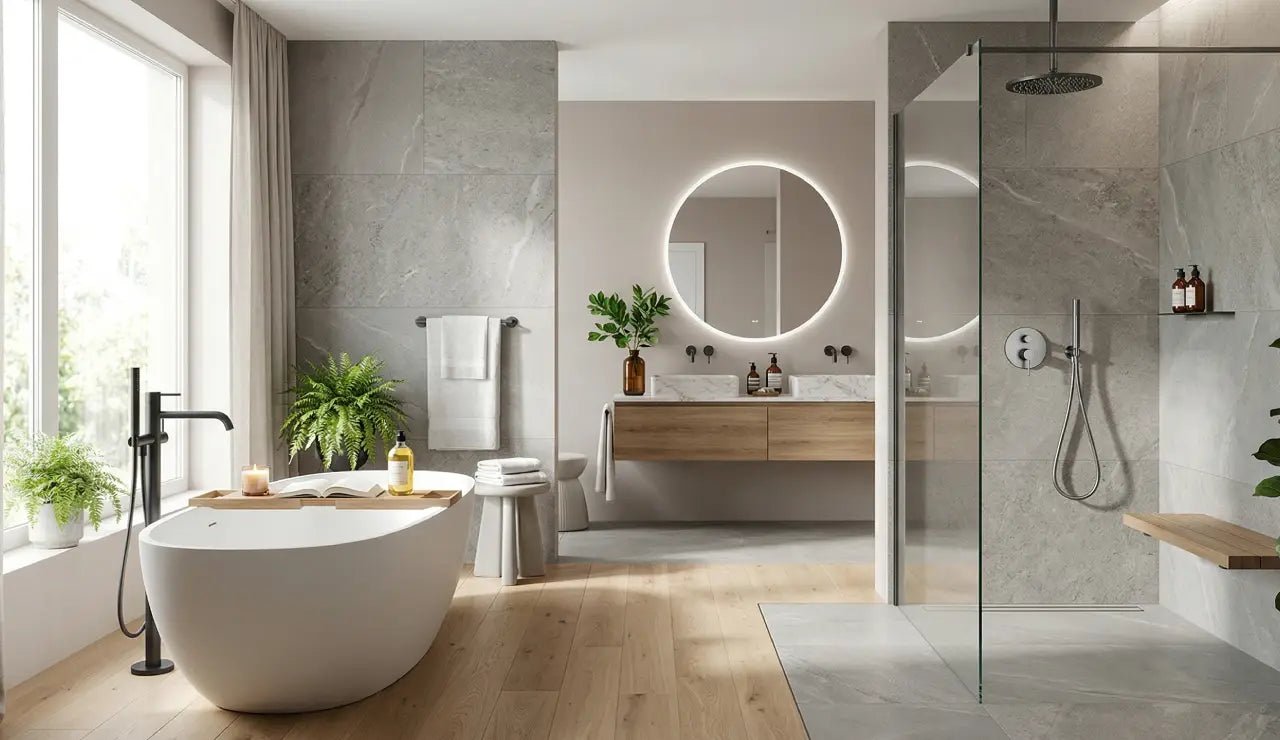
On the other hand, the shower offers greater design versatility, adapting both to small spaces and large bathrooms. Walk-in showers, characterized by large glass surfaces and the absence of doors, are particularly trendy, creating a sense of openness and continuity in the space. These minimalist solutions integrate perfectly into modern environments, offering a clean and contemporary look.
Current trends in bathroom design
Current trends in bathroom design see a growing preference for solutions that combine aesthetics and functionality. Showers with floor-flush trays and transparent glass walls are in high demand for their ability to visually expand the space and facilitate access. Furthermore, the use of natural materials such as stone and wood, both for showers and bathtubs, contributes to creating a warm and welcoming environment.
For those with sufficient space, the integration of a freestanding bathtub next to a spacious shower represents the ultimate luxury, allowing you to alternate moments of quick refreshment with those of complete relaxation.
Decor tips for integrating bathtub or shower
For small bathrooms: opting for a corner shower or a walk-in solution with transparent glass walls can help maximize available space and keep the environment bright and airy.
For larger bathrooms: a strategically positioned freestanding bathtub can become the fulcrum of design. Consider installation near a window to exploit natural light or in the center of the room for a dramatic effect.
Materials and finishes: choose materials that harmonize with the rest of the decor. For example, an enameled cast iron bathtub can add a vintage touch, while an acrylic one with clean lines adapts to a modern environment. For showers, the use of large-format tiles or continuous panels reduces grout lines, contributing to a more uniform and spacious appearance.
Pros and cons of bathtub and shower
Bathtub
Pros:
- Relaxation and well-being: ideal for moments of relaxation, the bathtub allows you to immerse yourself completely, promoting muscle and mental relaxation.
- Aesthetic value: a well-designed bathtub can elevate the aesthetics of the bathroom, serving as a distinctive design element.
- Suitable for families with children: facilitates bathing for little ones, offering a safe and comfortable space.
Cons:
- Water consumption: filling a bathtub requires a significant amount of water, generally between 150 and 200 liters, influencing costs and environmental impact.
- Occupied space: the dimensions of a bathtub can be demanding in small bathrooms, limiting the space available for other elements.
- Accessibility: For elderly people or those with reduced mobility, getting in and out of the bathtub can be difficult and potentially dangerous.
Shower
Pros:
- Practicality and speed: ideal for those with a dynamic lifestyle, allows you to wash quickly, saving time.
- Water savings: a shower of moderate duration generally consumes between 50 and 70 liters of water, making it more efficient compared to a bathtub.
- Adaptability to spaces: showers can be designed to adapt to different space configurations, making them ideal even in small bathrooms.
- Improved accessibility: solutions like walk-in showers or floor-flush trays facilitate access, making them suitable for people with reduced mobility.
Cons:
- Fewer opportunities for relaxation: unlike a bathtub, the shower does not offer the possibility to completely immerse yourself, limiting the relaxation experience.
Cleaning glass surfaces: glass walls require constant maintenance to avoid the formation of limescale and maintain their transparent appearance.
The choice between bathtub and shower depends on several factors, including available space, lifestyle, personal needs, and aesthetic preferences. If you love moments of relaxation and have the necessary space, a bathtub could be the ideal solution. Conversely, if you have a hectic routine and desire practicality, the shower represents the most functional choice.
Another aspect to consider is sustainability: if water saving is a priority, the shower is generally more efficient, while a bathtub can be a better option if used occasionally for total relaxation.
For those who do not want to give up either solution, there are hybrid options, such as bathtubs with an integrated shower enclosure, which combine the best of both worlds. This solution is particularly useful for those with small children or for those who desire a versatile bathroom without sacrificing too much space.
A little tip!
Regardless of the choice, the important thing is to design a bathroom that reflects one's lifestyle and creates a harmonious and welcoming environment. Consider your daily habits, the design you prefer, and the comfort you desire, and choose the solution that best fits your needs.
If you are renovating the bathroom or designing it from scratch, consult a professional to evaluate the feasibility of the different options and get the most out of your space. Whatever your decision, the perfect bathroom is the one that combines aesthetics, functionality, and well-being!


